

Last month’s COP30 conference held on the edge of the Amazon inspired some words from our partners at Tropic, specifically from general manager Jascivan Carvalho. We found his message to be timely and important, and wanted to share it here in full:
In the lead-up to COP30, the United Nations Climate Change Conference held last month held in Belem, Brazil, a vital gateway to the Amazon, I was deeply moved by the clarity of thought and strength of messaging from Indigenous leaders across the Amazon. Ecuadorian Indigenous leader Nina Gualinga and Sápara leader Eli Virkina published a powerful piece in The Guardian about the risks of commodifying cultures, sacred traditions, and ancestral territories in the name of “tourism” or “personal transformation.” Their message is essential reading for anyone working in travel.
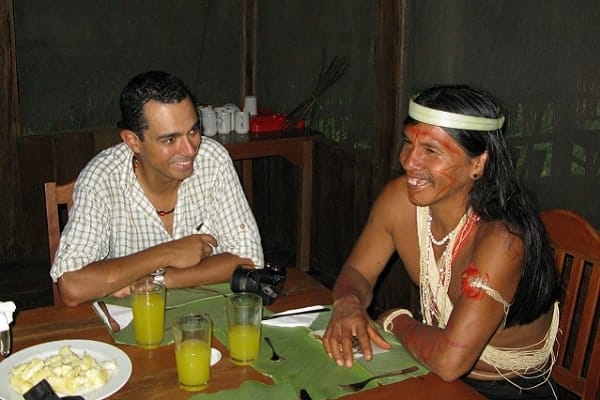
At Tropic, we have spent decades collaborating with Indigenous nations, and their words ring true. Our work with the Waorani taught us early on that true community-based tourism requires much more than access or creativity; it requires ethics, humility, and strict protection of cultural and territorial integrity.
Our model has always placed community leadership at the center with clear codes of conduct tied to anthropology, not marketing. We practice absolute respect for legally protected territories, including Intangible Areas, while valuing cultural continuity above commercial opportunity.
These are not optional principles. They are the foundation of responsible engagement in one of the most sensitive cultural landscapes on the planet.
Today, as new wilderness camps and expeditions emerge — often promoted without cultural context or territorial awareness — it feels important to echo what Indigenous leaders are saying:
* Sacred traditions are not commodities.
* Indigenous knowledge cannot be packaged for entertainment.
* Some places are not meant for tourism — ever.
* If the community is not leading, something is wrong.
Gualinga and Virkina remind us that extractive models don’t always look like oil or mining. Sometimes, they appear as “regenerative,” “positive,” “sustainable,” “transformational” or “wellness” experiences that subtly distort language, rituals, biodiversity, and community dynamics.
As an industry, we must listen carefully. Not defensively. Not selectively. But with genuine respect. If we truly care about nature, we must start by protecting the people who have safeguarded it for thousands of years. Let’s ensure that tourism is part of the solution – not another source of pressure.
At Tropic Travel , responsibility has always come before opportunity, and it will continue to guide every decision we make. We are happy to share our own experiences; the positive and the challenging, the successes and failures – including those that never saw the light of day – because that is where true learning lies.
Expect to hear more from me about Tropic’s conservation and community commitments and projects in 2026. I hope you’ll join us in our efforts.

Leave A Comment
You must be logged in to post a comment.