


Last month, I hosted a group of tour operators for a comprehensive Madagascar FAM with ASISTEN Travel. For so long I have heard that travelers need to pack their patience when visiting Madagascar, however I didn’t find that to be the case, thanks to Asisten’s expertise as well as their extensive use of private charter flights to move around the country. We were able to explore many landscapes – from the lunar rock formations of Isalo and the thick forests that host the country’s 112 lemur species to the rich waters around Nosy Be where we discovered thriving marine life. Here are my top 5 highlights from our incredible Madagascar FAM with ASISTEN Travel and our incredible guide, Ta.
Antananarivo
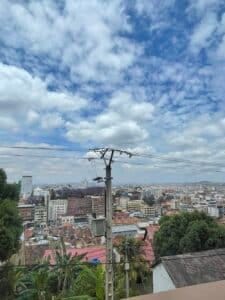
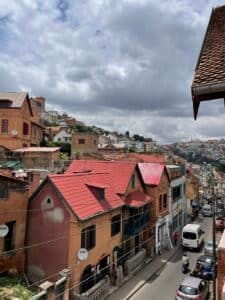
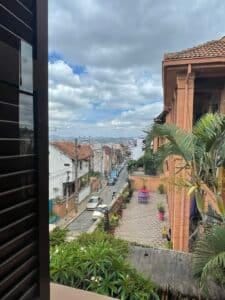
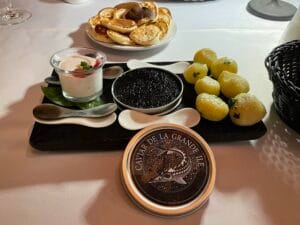
I am not a city person. I mean, cities are fine – who is going to knock Paris or Chicago or Cape Town? But I’d prefer to be in nature. That said, I was delighted by Antananarivo’s (aka Tana) very great vibe. The city hums – there are people everywhere just busy busy busy doing their thing. There are no signs whatsoever of the political unrest that took place in September and I was left scratching my head as to why the State Department still has the destination listed at Level 3 (Note – Madagascar was moved back to Level 2 in early December 2025). Restaurants buzzed, the streets were full of kids going to and from school and people commuting and working, empty fields almost unfailingly had soccer matches on and the traffic with (sometimes VERY) dated Renaults and Peugeots moved along, albeit sometimes slowly up the city’s steep hills. All the better for us to take it all in riding in our late model compact SUV’s (two guests per vehicle unless otherwise requested). The meals we had were memorable (Malagasy caviar, anyone? Yes, please!), the people friendly, views from around the city were incredible and the lodging options wide-ranging. I loved Tana’s feel and was glad we got to spend a bit of time there.

Wildlife
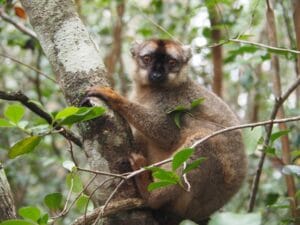
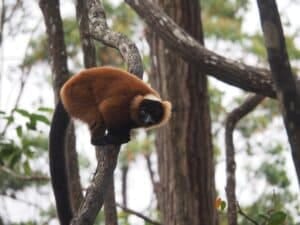
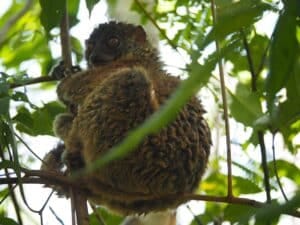
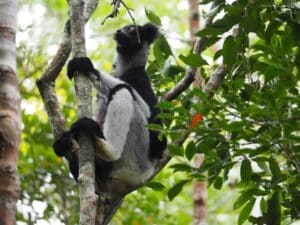
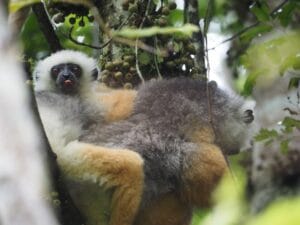
I know it’s low hanging fruit as a highlight, but this is wildlife you haven’t seen anywhere before! Most all of the country’s reptile and amphibian species are endemic as are all of its lemurs and about half of its birds are as well for all of you twitchers. Given its split from Africa more than 150 million years ago, none of the species you’re accustomed to seeing on safari are found there either, and there are no mammals or reptiles that can kill you (unless you can’t outrun a boa constrictor, which is highly unlikely to give chase!). It’s its own unique microcosm.
The chameleons are charming and some of the insects are absolutely bonkers fascinating, but it’s the lemurs that really capture the imagination. From the very noisy, somewhat haunting call of the indri indri (one of the largest lemur species) to the ridiculously adorable mouse lemur (more than 20 species!), there’s almost no end to what you can search for, as each forest hosts at least some different species. All are engaging and some are easier to see than others. What you will definitely have is a crick in your neck after staring into the treetops with rapt attention for longer than is healthy for your cervical spine. Well worth it. All in the name of exceptional wildlife viewing!
The food
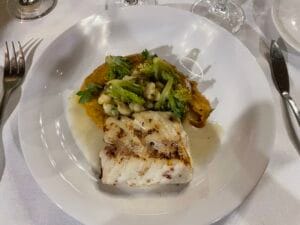
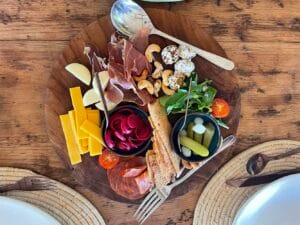
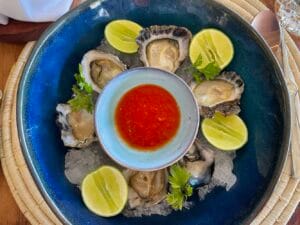
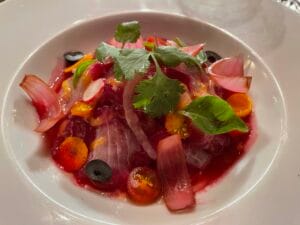
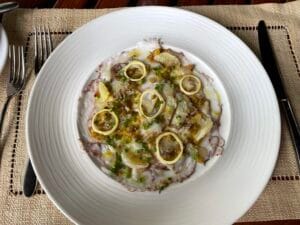
I had heard that I would likely enjoy the food in Madagascar, but I was unprepared for just how much! From the Madagascar farmed caviar enjoyed on our first night during a wonderful, multi-course meal (oh wait – they were basically all multi-course!) to the incredibly fresh fish that we had during our time around Anjajavy and the Nosy Be area, there wasn’t a dish I didn’t like! Zebu, a subspecies of domestic cattle that is very important in Malagasy culture), is frequently found on menus (though is eaten sparingly by much of the population as meat is expensive) and is as delicious as any pasture-raised beef. Baked goods are a welcome legacy of the French, with croissants, pastries and baguettes making very regular appearances on the table. Fish and seafood when in coastal areas is a must (and is just incredible); while romazava, the country’s national dish consisting of (most typically) zebu (but could also be chicken or seafood), greens, tomatoes and onions, typically accompanied by rice, shouldn’t be missed. Rice is a staple and available with most meals (including a lovely porridgey breakfast dish with greens), and the average Malagasy eats nearly 300 lbs of it every year!
A kind-of secret oasis
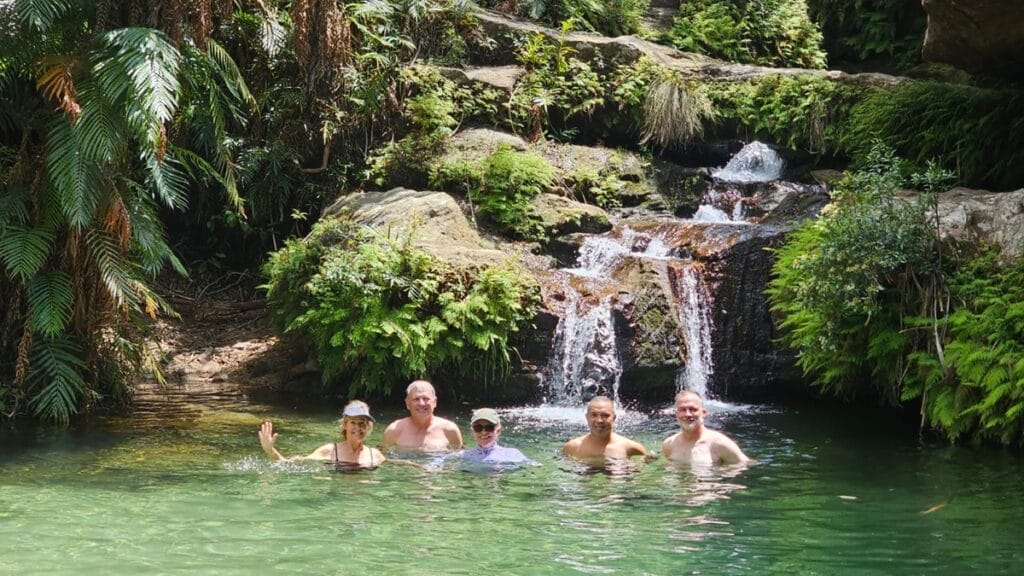
During our time in Isalo, we took a long hike through the canyons of its lunar landscape. We climbed atop rock formations admiring the views, stopped to observe insects that we never would have noticed with their masterful camouflage save for our guide’s eagle eyes, and learned about the area’s unique flora. While I knew we would have the chance to ‘swim in natural pools,’ never did I imagine coming upon a palm-fringed oasis with a glittering waterhole in the middle of this stark area. On a hot day, the refreshingly cool water was absolutely invigorating and restorative. With just a few other keen hikers paddling around, it was a special respite from the harshness of the rocky landscape. It was almost like a dream, including the entrepreneurial guy that had dragged a bucket filled with ice and cool drinks all the way out there for thirsty hikers. Good man.
Flying private
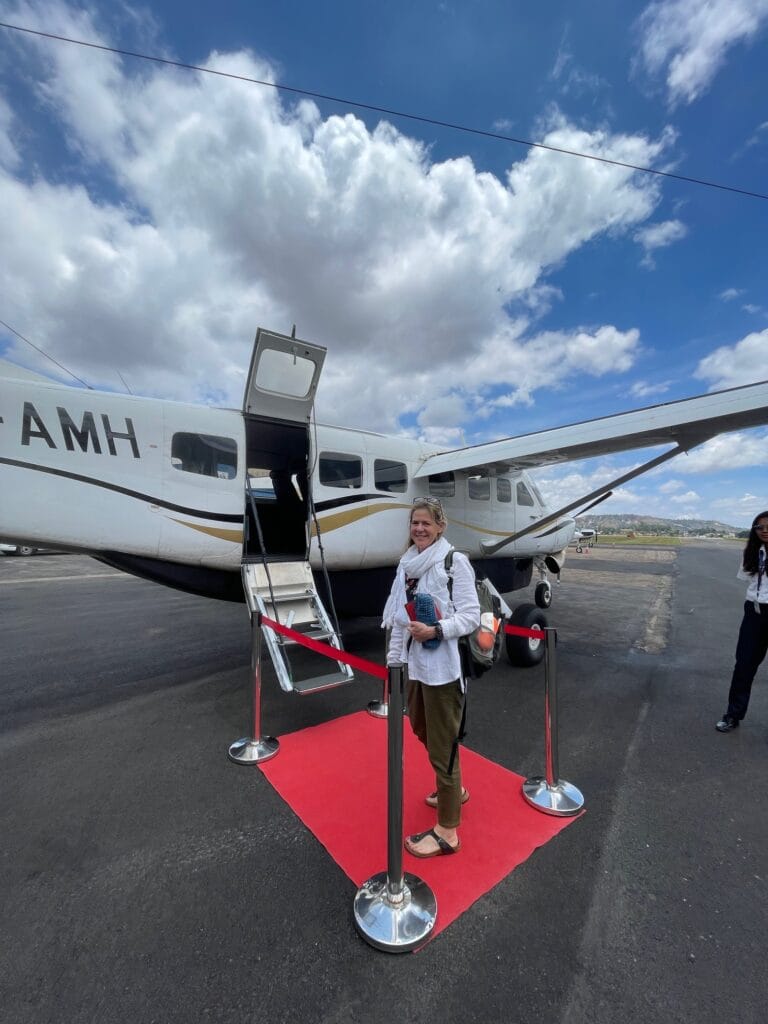
It was a very ‘I could get used to this’ sensation on our first private flight from Tana to Isalo. Arriving at Tana’s domestic airport, we were whisked to a counter, bags (and people!) weighed and then brought through to private transport and driven to a (yes, private!) lounge. The lounge had delicious snacks and coffee along with comfortable seating and good wifi. We had a few minutes to relax as the plane was readied and then we were led out to the red carpet – yes, a red carpet – to board our private Cessna Caravan flight to Isalo. All of our internal flights save our last flight returning to Tana were private charters making them 100% reliable (barring weather issues of which we encountered none) and 100% easy, which is frequently not the case with scheduled flights.
It nearly goes without saying that flying private is more costly than commercial, however it is the best tool to optimize time in-country. Built into an broader itinerary, it is still cost competitive for an entry level luxury African safari and it makes sense for many reasons, not least of which is that it helps ensure your guests have a Madagascar experience where they remember the wildlife, sights and people instead of travel delays or complications. Madagascar does not need to be a complicated or difficult destination – traveling with ASISTEN mitigates those worries. It is of course possible to book scheduled commercial flights – ASISTEN will do their best to manage them, however cancellations and delays are out of their control.
As a big bonus, we also had a surprise visit to Time + Tide’s Miavana on our last full day which included a round-trip helicopter transfer. This was again totally seamless transport and very cool to boot as we were able to enjoy a fun and scenic 1-hour flight across the tip of northern Madagascar – twice!
If you’re keen to learn more about travel in Madagascar with ASISTEN Travel, view this webinar and contact us for an introduction!

Leave A Comment
You must be logged in to post a comment.