

Story by TOSEA co-founder Bryan Jauregui
Andrea is 30. Nishma is 33. Luli is 39. Together, the three Mexican female adventure guides of Todos Santos Eco Adventures have quietly made the guiding world in Baja California Sur more interesting, more humorous, and arguably more competent than it was a generation ago. They run kayak trips, snorkeling expeditions, mountain treks, and gray whale encounters. They know their birds, marine life, desert plants, and geology. They read currents, skies, rooms, clients, and each other. And they have opinions – particularly about the guy who talked for forty straight minutes while a group of awestruck women was trying to listen to sea turtles breathe.
But we’ll get to him.
Adventure guiding in Baja is a young profession – barely thirty years old. What started as an ad hoc industry built on fishermen with boats and local knowledge only recently became something with formal skills, certifications, and outfitters. That first generation of professional Mexican guides? Almost entirely male. The reason, Andrea explains, is less sinister than structural.
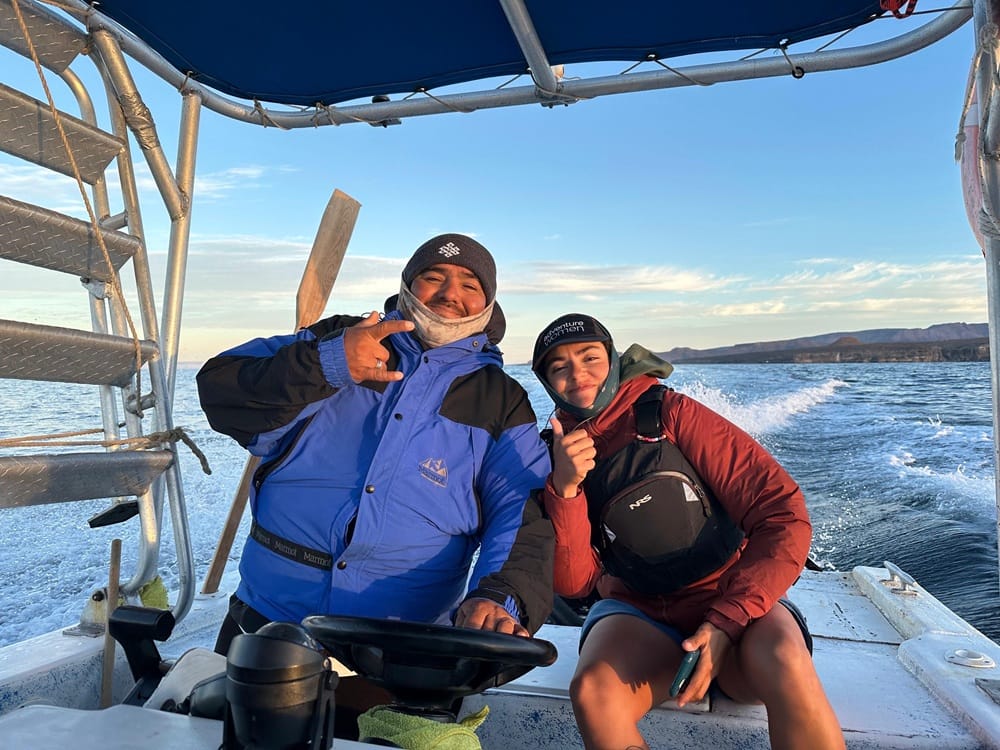
“The adventure travel industry here started with fishermen,” she says. “And the fishermen would hire their friends. And in Mexico, guy friends tend to have guy friends.” She pauses. “I don’t have data on this. But logically, that’s how it went.”
Each of their paths to Baja is its own small masterpiece of following your instincts through whatever detours life invents for you — and of being pointed toward nature by the women who raised you.
Luli grew up in León with a grandmother who skipped cartoons in favor of nature documentaries and taught her to read the moon and stars the way other kids learn the alphabet. “She explained it as things that work wonderfully without a battery,” Luli recalls. Her mother also never put her in a gender box, letting her play Indiana Jones to her heart’s content. She went on to study law, endured two years at a corporate firm, then concluded: absolutely not. A late-night Google search (“Mexico conservation”) led her to a reef monitoring project in the Sian Ka’an Biosphere Reserve, where a scholarship for Mexican nationals covered her dive certifications. She went on to join NOLS Mexico, earn kayaking and sailing educator credentials, manage the organization’s Mexican branch as finance director, and eventually complete her instructor certification with Outward Bound. The corporate law phase, she now understands, was simply a detour life invented so she could appreciate the reef more.
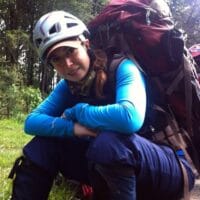
Nishma grew up making annual trips to Isla Mujeres with her mother and sister, and the Caribbean got its hooks in early. “One of my biggest inspirations is feeling free, feeling off the grid and just being present in nature,” she says. At university she veered into graphic design and built a career around it — one she enjoyed but that kept her firmly inside four walls, which she was increasingly certain were not her natural habitat. A family accident gave her time to reconsider. She moved to La Paz and enrolled in the alternative tourism program at UABCS, which she describes as possibly the best degree in Mexico, covering guiding practice, entrepreneurship, and financial management, She landed her first guiding gig when a friend asked her to cover a day trip to Isla Espíritu Santo. She’d never guided anything. The boat captain, who now works for Todos Santos Eco Adventures, clocked the situation immediately and stepped in. “He said everything in Spanish, and I just translated everything he said to the clients. He was so kind.” The sea lions cooperated beautifully that October, the puppies tumbling through the water like small, barking gifts. By the time the boat docked, Nishma had made her decision. “If I do this for a living,” she thought, “I get to swim with sea lions every day and get paid.” The logic was airtight.
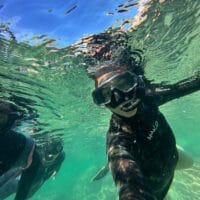
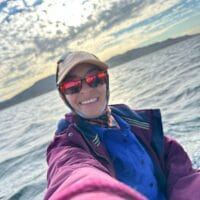
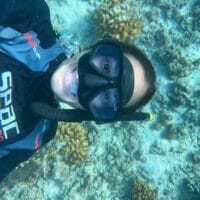
Andrea came up differently. Her mother and grandmother both make medicine from plants, and she arrived in the world already a nature lover — and, as she describes herself, an “angry feminist.” She had her career figured out by middle school. What she needed was proof the career existed. An uncle’s friend at UABCS provided it: his coursework involved mountain biking, kayaking, and rock climbing. She couldn’t believe such a life was possible. She graduated high school, moved to La Paz, enrolled in the alternative tourism program, and founded a student adventure club that ran weekend trips into the field. On one of those trips she met TOSEA guide César Caballero, who recommended her to the company.
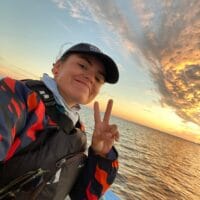
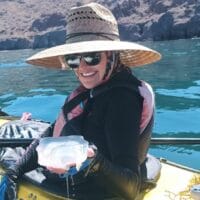
Ask all three women about the advantages of being female guides and they land on the same thing: the sisterhood. It’s a WhatsApp group of local female guides that functions as both a professional network and an early warning system. “Don’t work with this captain,” someone posts. “This company’s owner asks for photos of your face before he hires you, and only hires pretty ones,” warns another. The informal mutual aid network that male guides have apparently never felt the need to build turns out to be one of the more powerful professional tools in the industry.
“Men are like, ‘I don’t need anyone,'” Andrea says. “For us, it’s easier to build a sisterhood. And we know we’re all in a similar situation, so we stick together.”
The disadvantages are real, if sometimes absurd in their specificity. For years, Andrea watched boat captains instinctively verify her instructions with the nearest male guide, as if her words required a second opinion to become official. She dealt with it the way she deals with most things – by being extremely clear and extremely persistent – and now reports that the captains she works with regularly have adjusted. “I know how to work with them, and they know how to work with me.”
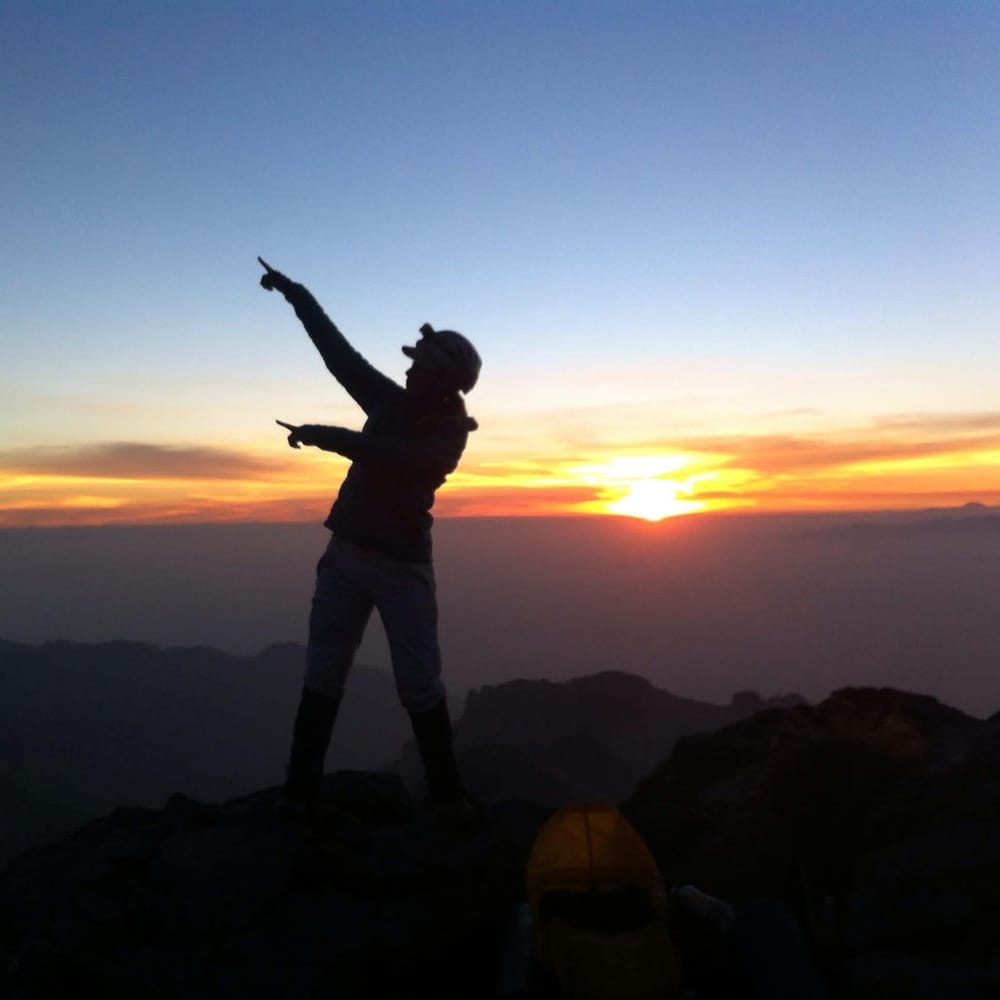
All three carry a kind of ambient awareness their male colleagues simply never have to bother with, a low-level tax on mental energy spent navigating spaces that weren’t designed with them in mind. “We waste energy thinking about how to move through their world so we don’t lose respect,” Andrea says. “They’ve probably never thought about it once.”
Nishma frames the bigger picture plainly: Mexico is a Catholic country with deep traditional structures, and the share of Mexican women whose families actively push them toward non-traditional fields is still small. What these three share – beyond skills and the ability to read weather – is that the women in their families pointed them toward nature rather than away from it. Grandmothers with stars. Mothers with medicinal plants. Mothers who let girls play Indiana Jones without commentary.
Which brings us back to the male guide who would not stop talking.
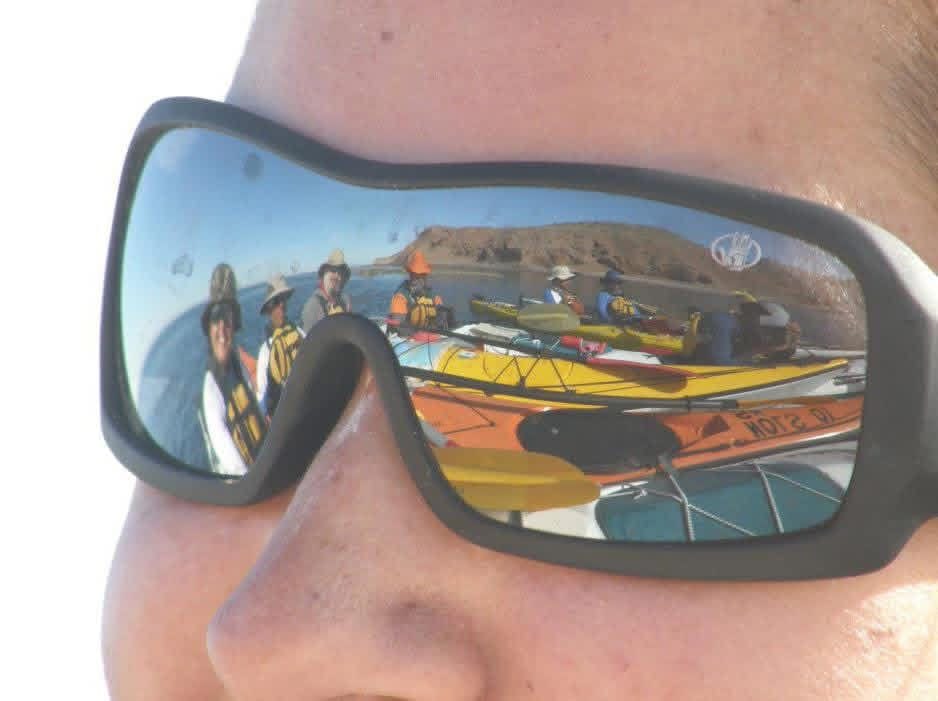
Andrea was co-guiding a sea turtle trip with a group of women who had come specifically for the silence – the breath sounds, the weight of witnessing something ancient. She had read the group. She knew exactly when to go quiet. Her male colleague, apparently running on different software, talked for forty uninterrupted minutes. She tried to redirect. He lasted two minutes before resuming. The group gave her the look. She gave it back. No words were necessary.
“Females see things that males can’t,” Nishma says. “It’s in our nature.” She doesn’t mean this mystically. She means that decades of being told to be observant, attentive, socially aware, and attuned to others’ needs – all the qualities traditional culture assigned to women as domestic duties – turn out to be, in a guiding context, genuinely excellent professional skills. Reading a group. Sensing when to push and when to let the moment breathe. Knowing the turtles are breathing without anyone having to announce it.
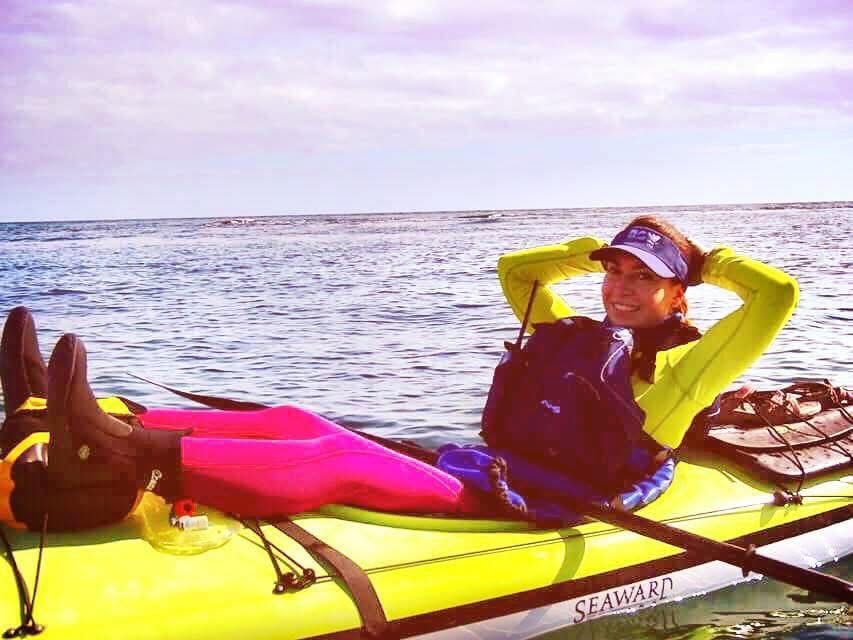
Luli, who quit corporate law, went to monitor reefs, and somehow ended up exactly where her seven-year-old self always wanted to be, puts it simply: “Life just put me back where I wanted to be originally. I only realized that a few months ago.”
Guiding in the oceans, mountains and deserts of Baja. That’s exactly where they are.

Leave A Comment
You must be logged in to post a comment.